David the shepherd boy, Israel’s King, and a man after God’s own heart usually receives the lion’s share of attention in sermons and Bible lessons. Yet David would not have lived to become king without the help of his closest friend and fellow warrior, Jonathan. (1 Samuel 13 – 20)
Jonathan was King Saul’s son and the heir Israel’s throne. Following David’s well-known slaying of Goliath the giant, David grew in favor among the people. For a time, things between King Saul and David were harmonious, and Saul gave David more leadership responsibilities and recognition. However, David’s popularity and military successes eventually began to eclipse Saul’s. Saul perceived David as a threat to his power and sought to have David killed on several occasions.
Typically, someone in Jonathan’s position might have supported a scheme like that. He would have known that David was God’s next anointed. He could have supported his father Saul in a bid to preserve the crown for himself, but he didn’t. When Saul told Jonathan that David must die, Jonathan opposed his own father the king. Saul attempted to kill Jonathan with a spear because of it.
This wasn’t the first time Jonathan had nearly perished at the hands of his own father. Saul’s reign was rife with conflict and intermittent wars with a group known as the Philistines. Before Jonathan met David, the Philistines had taken control of all the metal workers (black smiths) to prevent the Israelites from arming themselves. Only Jonathan and Saul had metal weapons (swords and spears).
Jonathan and his armor bearer snuck out to the Philistine encampment. In hand to hand combat, with 20 to 2, abysmal odds, Jonathan and the armor bearer emerged victorious. Their surprise attack gave Saul and the Israelite army the advantage and they ultimately won the day despite being vastly ill-equipped, and as modern expression might put it, outgunned.
Jonathan ought to have been rewarded for this incredible, heroic effort wherein he risked his own life rather than throwing his unarmed men into the teeth of the enemy. Instead, because he had not heard his father’s decree for the men to fast, Jonathan ate honey. When it came to light that he had broken the fast, Saul wanted to put Jonathan to death. Only the intervention of Jonathan’s soldiers, who spoke up on his behalf, saved his life.
Jonathan later met David and the Bible says Jonathan “loved David as himself.” Jonathan would have considered David a closer friend than a brother, a member of his own family. Saul grew more and more unhinged and eventually sent assassins to David’s house to kill him one night. However, David managed to escape with his wife’s help.
David went to Jonathan for help. At what was undoubtedly great risk to himself, Jonathan created a secret code that only he and David knew using a bow and arrows. It likely would have held special significance to the two friends because a bow was among the first things Jonathan gave David when they first became friends.
Jonathan then went to King Saul and attempted to determine how real and severe the threat to David’s life.
Then Jonathan said to David, “I swear by the Lord, the God of Israel, that I will surely sound out my father by this time the day after tomorrow! If he is favorably disposed toward you, will I not send you word and let you know? 13 But if my father intends to harm you, may the Lord deal with Jonathan, be it ever so severely, if I do not let you know and send you away in peace. May the Lord be with you as he has been with my father. 14 But show me unfailing kindness like the Lord’s kindness as long as I live, so that I may not be killed, 15 and do not ever cut off your kindness from my family—not even when the Lord has cut off every one of David’s enemies from the face of the earth.”
16 So Jonathan made a covenant with the house of David, saying, “May the Lord call David’s enemies to account.” 17 And Jonathan had David reaffirm his oath out of love for him, because he loved him as he loved himself.
18 Then Jonathan said to David, “Tomorrow is the New Moon feast. You will be missed, because your seat will be empty. 19 The day after tomorrow, toward evening, go to the place where you hid when this trouble began, and wait by the stone Ezel. 20 I will shoot three arrows to the side of it, as though I were shooting at a target. 21 Then I will send a boy and say, ‘Go, find the arrows.’ If I say to him, ‘Look, the arrows are on this side of you; bring them here,’ then come, because, as surely as the Lord lives, you are safe; there is no danger. 22 But if I say to the boy, ‘Look, the arrows are beyond you,’ then you must go, because the Lord has sent you away. 23 And about the matter you and I discussed—remember, the Lord is witness between you and me forever.”
1 Samuel 20: 12-23
Jonathan went so far as to make a covenant with David. A covenant was the most solemn vow or agreement into which a person could enter. It mirrored the covenant God himself made with the Israelite’s forefathers Abraham and Isaac.
When Saul nearly killed Jonathan for questioning the king’s judgment regarding David, Jonathan used the arrow code to signal David, thereby saving David’s life and ensuring David would eventually come to the throne. Through David’s lineage, the whole world would be saved through the birth, death and resurrection of the Messiah, Jesus Christ.
Jonathan’s actions had far greater ramifications than he could have possibly foreseen. He stood beside his friend David and honored God’s will for his life, even though by worldly standards, he may as well have signed his own death warrant. Jonathan valued something greater than his own life and desires. By sacrificing his future, he paved the way for the salvation of the entire world. He just didn’t know it.
28 “Come to me, all you who are weary and burdened, and I will give you rest. 29 Take my yoke upon you and learn from me, for I am gentle and humble in heart, and you will find rest for your souls. 30 For my yoke is easy and my burden is light.”
Matthew 11:28-30 NIV
Jesus is the only One in whom our souls find true rest. The biblical context for one of his most well-known statements, “Come, take my yoke” is a bit odd. Just before this, Jesus had been talking about John the Baptist, who at that time was imprisoned. (Later, John was beheaded by King Herod.) To sum it up, the situation feels a bit like, “D—- if you do, d—- if you don’t.” People judged John for his fasting, and thought he was demon-possessed. Then, those same people turned around and judged Jesus for NOT fasting and thought he was a drunk. Jesus acknowledges and points out the irony of this, but concludes by saying “wisdom is proved right by her deeds.”
Then, Jesus denounces all these towns where he preformed miracles because they saw his power but didn’t change their ways. He calls them out pretty harshly. He says if Sodom had seen him do what they had, its people would have responded rightly and been better off than they were. (Sodom was one of the most detestable and notorious cities of the old testament – it was so bad, God razed the place to the ground after he couldn’t find so much as 10 righteous people in the whole place.)
Now, we come to it. Jesus thanks God for taking what should have been obvious to the wise and revealing it to children. He calls to the weary, the burdened, the exhausted, the ones who’ve been knocked down, and nearly given up. These are the ones he implores to learn from him, to take his yoke because he is gentle and humble. His burden is light.
The audience doesn’t seem to get it though. The next scene finds Jesus walking through the grain fields on the Sabbath, and his disciples are picking some of the grains and eating them. This was against the Jew’s religious laws and customs, which were very strict about what could and could not be done on the Sabbath day. Jesus explains again, pointing the criticizers back long ago when King David’s warriors, who were starving and desperate, ate bread specially blessed in the old testament temple that they weren’t supposed to take. Jesus says if they had known what it meant that God desires mercy, not sacrifice, they wouldn’t condemn the innocent.
It is perilously possible to miss Jesus’ point entirely. Mercy means withholding a punishment that someone justly deserves. A yoke was a device meant to harness oxen to a plow. In ancient times, oxen were often driven to pull heavy burdens and were incentivized by people standing behind them with sharp sticks (ox goads) or whips. It wasn’t kind, nor particularly merciful. Yet, Jesus stood between us and the whip, taking the punishment we earned. Mercy. He withheld and absorbed the pain and bears the load himself.
The religious leaders and many in the audience missed it. They were hurling ox goads at other’s wrongs. Nothing anybody did (or didn’t do) was acceptable, even Jesus’ own actions and those of John the Baptist were met with scorn and self-righteous attitudes.
These people were holding the wrong yoke. They didn’t realize it but they were burdening themselves deeper and deeper in the mire. They constantly forced unbearable yokes upon themselves and one another. When they, inevitably, didn’t measure up, they were swift to follow with an ox goad instead of compassion. They were trapped in a yoke of their own making, unable to give or receive mercy.
Many of them never got what Jesus was trying to tell them. Hence, the really strong warning Jesus gives the towns who couldn’t see past their own noses even with miracles of mercy and grace smacking them right in the face. Put another way, “Blessed are the merciful, for they shall receive mercy.”
Sometimes the yoke can look like all the right things. Maybe it’s an idealized notion of what something ought to be. Maybe it’s even within a church or a ministry. Maybe it’s other people’s expectations of you or the weight of their godly passions and dreams that for whatever reason you feel obligated to take up. Then, when something happens and the body of Christ starts to bicker, we go right back to putting yokes on each other and we can’t even see it, because we think we are doing the thing God wants: sacrifice, not mercy.
That doesn’t mean there is no judgment of wrongdoing. Jesus is very clear that there is. It’s not an anything goes, do what’s right for you, claim your truth, judgement free zone. It’s also true though, that we (human beings) are not the judges. God is. When people come to Jesus, when they seek him out, Jesus is quick to step between them and the ox goad, freeing them from the burden of the plough. Jesus is the only one with the right to condemn, and yet he doesn’t, “Let him who is without sin, cast the first stone.”
Every person must choose for him (or her) self which yoke they are going to hold. Like Paul, Jesus allows people to “kick against the goads” for themselves, but it doesn’t get them very far, and it makes the pains of life worse.
The only yoke that matters is the one that is between you and Jesus. You’ve got to accept it, but once you do, you find there is no condemnation within it. Jesus has withheld the punishment from you. He pulls the weight and lavishes unmerited grace and favor. Everyone is yoked to something, but only Jesus’ yoke is freedom.
If you know the Lord of the Rings, then you are probably familiar with the character, Peregrin Took, or as he is more commonly known, Pippin.
Pippin from Lord of the Rings: Return of the King
Pippin is a hobbit from the Shire of Middle Earth. He is best remembered for his mischievous antics, humor, and general lack of common sense. Gandalf often calls him a fool and with good reason. Pippin is the character who would be voted least likely to succeed. Hobbits, by their nature, aren’t meant to go on grand adventures or embark on quests which change the fate of the world. Pippin, though, is perhaps the least qualified even among hobbits.
We’ve all worn Pippin’s shoes at some point or other in our lives. Most of the time Pippin’s tricks are all fun and games and he doesn’t consider their outcome or how they might impact other people.
Pippin eventually learns there are sometimes hard consequences for his foolishness. In the mines of Moria, he pokes around until he unintentionally awakens the entire underside of the mountain, which is filled with orcs, goblins, and worst of all, a Balrog demon. In the ensuing battle, Gandalf is lost to the company when he sacrifices himself to stop the Balrog.
Pippin in the Mines of Moria
Pippin carries this burden with him for a significant portion of the quest. It could be argued that everything that happened in Moria was his fault. Gandalf had repeatedly cautioned the members of the fellowship to tread carefully and quietly. Pippin matures somewhat under the weight of this regret.
Gandalf eventually returns and reunites with members of the fellowship. Just when we think Pippin has learned from his folly, he goes and messes up again. He touches a lost seeing stone, a Palantiri, after being warned about it. In so doing, he draws the eye of Sauron and puts himself and everyone he is with at risk.
Lastly, Pippin indentures himself to Boromir’s father, Lord Denethor. Pippin does this out of a misplaced sense of duty, but here again he is a fool, ignoring Gandalf’s wisdom. Lord Denethor is a harsh master and in a cruel twist, makes Pippin little more than a court jester. Pippin has been a fool and now he is ordered to play the fool for Gondor’s court.
Pippin gains wisdom through hardship. Yet, without his foolish actions in Moria, Gandalf would not have defeated the Balrog and become Gandalf the White. Pippin’s encounter with the Palantiri ultimately distracted Sauron and protected Frodo. His indentured servitude to Lord Denethor placed him in the unique position to light the signal fires to acquire aid from Rohan. It also allowed him to save the life of Boromir’s younger brother, Faramir.
Pippin Lights the Beacons of Mines Tirith
Pippin’s life shows us that while we will err, nothing we do is beyond redemption. Learn from mistakes and endeavor not to repeat them, but beware of carrying guilt and burdens when we must relinquish them to Christ.
The Heart. I don’t get it right all the time. Often, the words I write constitute beautifully packaged wisdom, but they don’t show the hard fought, ugly battles through which that wisdom was gained. In real life, I am crippled by fears, sin, and invisible brokenness. There are two versions of me: the version that desires to love the Lord and honor Him daily and the version that is selfish, weak, and susceptible to every kind of wickedness.
I can confidently say I am the most secure of insecure people. I am infinitely secure in my salvation and the Anchor of my hope. The Lord has sealed my soul and lifted my spiritual feet to the high places. Everything else I am – that is Adam’s flesh and Adam’s bone – makes me insecure and mentally broken, full of anxiousness, pride, and isolating darkness.
I see the faces of people I love and watch their journey through life as they search for fulfillment. I hold Truth in my heart but am incapable of speaking Him to them. I wish I could say it comes from holy fear that I will misrepresent who God is in my clumsy endeavor to share His gift and follow His great commission. But that would be a lie. I am more afraid of their rejection. If I tell them that Jesus is the way, I will sound hard and unyielding. So, I keep silent. I don’t love them enough to risk my own pain in order to show them the light of the Everlasting. That is the shard of darkness hidden in my heart of hearts.
Science has discovered the human heart emits a rhythmic, powerful magnetic field that envelops the body and the surrounding space. This “aura” if you will can be detected from several feet away. The magnetic field has the power to influence its immediate vicinity. No wonder the Bible is so concerned with our hearts. Imagine the sickly rhythm a heart beating to the drum of wickedness and sin emits into the surrounding air. I don’t want that to be my heart. Every day God must work to replace my heart of stone with one of flesh.
Research Gate “Science of the Heart”
The Horse. One of my dearest friends has a new mustang. She is young, just three years old and was born in the long term holding corrals of the Bureau of Land Management (BLM). Wild horses in the western US are captured and managed by this organization. The white brand on each horse’s neck tells when it was born and where.
White Brand on Running BLM Mustang’s Neck Photo by A.A. Wordsmith
This horse was born in long term holding, which means that she had never known freedom. Her mother most likely ran wild with a herd before being rounded up by helicopter and funneled into overcrowded pens. Yet, for this young filly, freedom is not something she ever experienced. She didn’t know what she lost because she never had it to begin with. High fences and limited space were all she knew. Imagine her surprise and pleasure at being brought to my friend’s beautiful farm full of wide open, grassy pastures and love. She was suddenly free to run.
Sin is like long term holding for humans. We are born into it because of Adam’s curse. We don’t even know what we’re missing until someone else shows us the way. Jesus is like our loving trainer. When we come to Him, we are shown the vast, surprising liberty that comes with forgiveness and a glimpse of what the world will be like when He returns and makes all things whole and perfect again.
Horses, like humans, have hearts that emit an energy field. Only theirs is much bigger and stronger than ours. It’s so strong in fact, that the horse’s heart rhythm can actually change ours just by being close to them. In addition, horses have a “coherent heart pattern” which is affiliated with increased calm and healthy emotional states. Their hearts literally talk to ours when we are near and make us feel better just by their sheer presence.
The thing about the mustang from long term holding is that her heart remained strong. Our hearts might be marred by sin but God has the power to cleanse us from our unrighteousness and purify our hearts. He can restore our “coherent heart pattern” and bring us close to His own heart. That’s what God wants for us. That’s why Jesus died and rose again for us.
The Breath. I read recently that Biblical scholars have researched God’s name, YHWH. In the Old Testament, Moses asked God His name. God answered, YHWH. We translate this as “I am that I am” in English, which is pretty powerful when you think about it. But, going back to the Hebrew for a moment, the pronunciation of YHWH is literally the sound you make when you inhale and exhale: breathing. Hebrew has consonant sounds that we don’t make in the English language, but when God said His name in Hebrew, He breathed. When God breathed into Adam’s nostrils the breath of life, He breathed His own name. When we say scripture is God-breathed, it IS Him. It is His name, I am who I am. Every breath we take we utter His name aloud. We may resist God, ignore Him, disdain Him, or love Him. No matter what we do though, we breathe Him.
The Laminin. Pastor Louie Giglio describes just how literally all things hold together in Christ. The molecular structure that enables our cells to stick to one another is called laminin. Laminin bears a striking resemblance to a cross. Without it, our bodies would literally fall apart.
So, to recap so far: God knows our hearts. He made them so powerful that hearts can influence one another, even across species through their magnetic rhythm. God’s name is literally the breath of life. God used a cross molecule to glue our bodies together.
The Locus of Control. The Locus of Control Behavior Scale is a tool that psychologists use to evaluate how people perceive themselves. In sum, it looks at whether a person believes the power of control lies within or outside of themselves. The idea is that a “healthy person” has a balance between internal and external loci of control, realizing that some things in life are not within their ability to manage and some things are totally theirs to control. The scale consists of seventeen statements that you rate based on how much you agree or disagree with them. Examples include comments like “luck or chance determine’s one’s future,” “a person can be the master of one’s fate,” “a great deal of what happens to a person is just a matter of chance,” “people are victims of circumstances,” and “being a success is a matter of hard work, luck has little or nothing to do with it.”
The more I studied this scale and worked with it, the more I came to realize the statements you are asked to rate are a poor attempt to measure the truth (or at least what a person believes to be true). Every statement made assumes there is a standard somewhere to be measured against. However, the scale itself ineffectually tries to remove that standard. Fate, chance, luck are all concepts directly contrary to the nature of God, but are placed there in lieu of God.
Luck does not determine the future. God says He knows the plans he has for us, plans to prosper and not harm us, to give us hope and a future. No one can be the master of his own fate. The truth is that many are the plans in a man’s heart, but the Lord’s purpose prevails.
God is the Locus. God is the Control. We can do all things through Him because He gives us the strength. But He also gives us the choice. Just like the wild mustang, we can choose to set God aside and find another locus. Find another answer. We can stay in the pen of sin and long term holding, never to experience the freedom He offers us. We can choose that, but we will still breathe the name of God simply by being. We will still experience the heart rhythms of the creation that God breathed into existence. We will still be held together by cross-shaped molecules, and we will still walk through a world that is really His to control.
I don’t get it right. I am broken and frail. My heart constantly rails against the “coherent rhythm” God wants to place in me so that I am within His perfect will. My mouth doesn’t always uphold the truth of the gospel. My thoughts stray from what is true and noble. My actions and my plans are selfish. And yet, despite all that, God chooses to use me. He chooses to let me breathe His name even when I am at my most ungrateful and disobedient. His grace is sufficient for me, no matter what.
Theoden, Lord of the Rings: The Return of the King
JRR Tolkien’s, Theoden, as adapted by Peter Jackson in the LOTR Trilogy is my favorite character of all time.
Theoden was the king of Rohan of Middle Earth during the rise of Sauron, the greatest evil of the age, and his life holds a compelling lesson for Christians today.
Theoden was well past the prime of his life when the events of the LOTR take place. He had an adult son, Theodred, and a grown niece and nephew, Eowyn and Eomer, all of whom were accomplished warriors and leaders in their own right.
Theoden was probably nearly ready to pass the responsibilities of rule on to Theodred and enjoy peace and quiet in his later life. He likely expected that his days of riding rough and leading the Rohirrim throughout the Riddermark were well and truly behind him.
Then, enter Grima Wormtongue. Grima was Theoden’s chief advisor, a debased and treacherous man who worked indirectly for the wicked, Sauron. Gradually, he whittled away Rohan’s strength, driving a wedge between Theoden and his family. He cast a dark enchantment on Theoden, which caused the king to shrivel away into a husk of his former self.
Theoden Cursed by Wormtongue
As king, Theoden was responsible for choosing his advisors wisely. He made the worst mistake of his life when he trusted Wormtongue, and placed him in a position of great power. Theoden slipped into the stupor of the enchantment and could not be stirred to action, even when orcs killed his only son and heir, Theodred.
He let slippery lies and falsehoods slowly worm their way into his mind. He became stagnant and complacent in his royal position. He grew disinterested in ruling and gave more and more of the responsibility to Wormtongue. It did not happen over night. Theoden fell by nearly imperceptible degrees over a long period, so that he did not even notice his own downfall as it was happening to him.
This is the way the Devil works. He worms his way into the Christian’s life with half truths and ideas that seem like wisdom. He wants nothing more than for the Christian to sit back and do nothing. He knows what a Christian anointed by holy fire is capable of, and the worst blow he can deal a Christian is to make him comfortable. This was Theoden’s failure.
Theoden became so comfortable where he was that he failed to sense the encroaching dark. He was utterly consumed and possessed. He became worse than impotent, useless in the fight against evil. Perhaps things would not have become so dire, had Theoden remained vigilant, but we will never know.
Thankfully, this complacency was not the end of Theoden’s story. However, as it was, it took drastic measures to reach Theoden deep in the pit where he had fallen. Only Gandalf could touch him, and it was a rather rude awakening. Sometimes Christians may find themselves on the receiving end of a Gandalf-level curse breaking. It’s downright painful and terrifying.
Fortunately, Theoden revealed to us his true mettle and showed us the path forward, should this be where we find ourselves. Once freed from the power of darkness, Theoden saw clearly for the first time in years. Yet, his body was still weak. In doubt, his hands trembled, and he looked to Gandalf. This was the first right action he took, replacing the advice of the worldly with that of godly wisdom. And Gandalf’s guidance does not disappoint. He proclaims to Theoden:
“Your fingers would remember their own strength better, if they grasped your sword.”
Gandalf, Lord of the Rings: The Two Towers
Theoden Awakens, LOTR: The Two Towers
The cure to Christian complacency and clouded vision is the Sword of the Spirit, which is the Word of God. In immediately reaching for his sword, Theoden banishes the last vestiges of darkness on his own, and evil no longer has a foothold in him.
The Bible is our best weapon, sharper than any two-edged sword, full of life and power. We need only reach for it to be reminded of our strength in Christ. This was the first critical step in Theoden’s journey to reclaim his life and legacy. It is the step all Christian’s must take if they are to remain awake to the times and connected to the Vine.
Yet, Theoden’s awakening did not signal his happily ever after, far from it. Christians throughout the ages have subscribed to the erroneous belief that if they do all the “right” things, God will make their life path smooth and paved with earthly rewards. That’s not to say there is not tremendous blessing in following Christ, because there is. But, that blessing will probably look vastly different than what passes for blessing by human standards. The blessing will often be accompanied by pain and testing. These produce perseverance and noble character, the things God seeks to cultivate in his children.
Theoden awoke to the news that he had lost his only child, Theodred. God the Father Himself showed us the magnitude of this kind of grief when darkness covered the land for hours as He mourned His Son on a cross.
LOTR: The Two Towers
Perhaps in Theoden’s position, some would wish they could go back to the curse of being unaware and unfeeling. That way Theoden would not have to face the road of intense grief and pain that lay before him. Yet, here again, Theoden rises above the circumstance. He embraces his grief and feels it deeply but refuses to let that stop him from serving and leading his people the best he can.
Theoden’s Grief, LOTR: The Two Towers
Again, he leans on good influences: Gandalf, his niece Eowyn, and Aragorn. He gives himself time to grieve but does not allow himself to sink into another kind of stupor, one of sorrow and depression. He fights with everything he has to get to his feet and lead.
Then, things go from bad to worse. Sauron’s evil host is at Rohan’s doorstep, prepared to annihilate everyone and everything in its path. Moreover, the rift Grima Wormtongue caused between Theoden and his nephew Eomer means that the bulk of Rohan’s armies are leagues away in the wrong direction, leaving the civilian populace minimally defended.
For the first time in years, Theoden is thrust into a situation which will determine if he still has what it takes to be king. Can he still lead? Can he still inspire? Aragorn was right there in the council room as was Gandalf. Theoden could have taken the easy way out and handed them the reins to his kingdom. The burden of life and death decisions could have been lifted from his shoulders in an instant.
For the first time in a long time, Theoden is free. What he chooses to do with his newfound freedom is remarkable in its own way. He listens to both Gandalf and Aragorn’s advice, but ultimately the decision is his to make. Gandalf counsels him to ride out and meet the opposing force head on. After a long moment, Theoden acknowledges what they want from him, but says he cannot risk open war. He chooses the path of his forefathers and puts his people first. They will fortify themselves within Helms Deep, a fortress that has never been successfully taken and has saved his ancestors many times before.
In this moment, Theoden shoulders the mantel of king and takes responsibility for his nation. He makes a decision knowing that the consequences will be his alone to bear. He is no longer willing to sit in comfortable complacency and watch others act. Was his decision the right one? Was it the best course of action?
Maybe. Gandalf’s counsel would have seemed to Theoden like suicide, pitting his few hundred men against a host of ten thousand, with no assurance of help from his nephew so far afield. And even if Eomer’s contingent arrived, they were only a few thousand strong.
Sometimes the Christian faces a crossroads in which it seems there are no good options. God’s calling may fly in the face of all human reason. Theoden was not prepared to follow Gandalf headlong into an unknown fate. At least not yet. However, God’s timing is everything. Theoden was about to bear witness to the Almighty working all things together for good.
“At dawn, look to the east.”
Gandalf, LOTR: The Two Towers
Theoden fortifies Helms Deep against the encroaching enemy despite knowing that he and everyone else will most likely die, even with the protection of the fortress. His decision has seemingly only delayed the inevitable. Suddenly, a foreshadowing that things are not as hopeless as they seem: an army of elves appears as if out of nowhere, swearing fealty to an ancient allegiance that has not been upheld for centuries. The elves throw in their lot with Theoden, despite the certainty that death is at the door.
Gandalf rode out in search of Eomer while Theoden and Aragorn prepared Helms Deep. It was a seemingly doomed errand, but Gandalf made a rather cryptic statement before he set out. “Look for my coming on the fifth day. At dawn, look to the east.”
Theoden and Aragorn held the defenses at Helms Deep for five terrible days against a relentless onslaught. First the outer wall fell, then the second line of defense, until only the inner keep remained. By the predawn hours of day five, any hope had been effectively snuffed out. In despair, Theoden cries, “What can man do against such reckless hate?”
The answer? Man can do nothing. We need MORE than a Man to face it. Evil would overrun Theoden’s people within the hour. It was now that Theoden was finally prepared to ride out against certain death. He led a handful of cavalry through the inner gates of the keep out into the teeth of the waiting enemy. As the sun rose on what promised to be a dark and bloody day of death, Gandalf appeared on the ridge, leading Eomer and his forces into the fray like a brilliant beam of holy light.
Impossibly, the enemy was defeated and Rohan saved. Theoden emerged uninjured, preserved despite all odds. His time had not yet come. There was still more for him to do.
Helms Deep At Dawn on the Fifth Day, LOTR: The Two Towers
Now, Sauron’s evil set its sights on Gondor, the neighboring kingdom who was supposedly Rohan’s staunchest ally. But Gondor had its own cancer growing inside it and had left Theoden to rot. Theoden would have been well within his rights to ignore Gondor’s plight as they had ignored his people in their desperate time of need. Admittedly, he was tempted to do just that.
But, when the fires of the signal flares were lit, and Gondor called for aid, Theoden and Rohan answered. Theoden was awake. He was no longer complacent, and he would be no bystander while evil raged. He would lead from the front despite being in his seventies when by rights he should have enjoyed a peaceful retirement.
If you thought the odds of victory at Helms Deep looked slim, the battle Theoden now waged was positively dismal. The forces of evil were impossibly huge, with numbers nigh immeasurable. Yet, Theoden had learned from Helms Deep. He would not give in to fear, nor despair. His final speech to his men before leading the charge into battle was incredible when you think about where Gandalf first found him in the throes of Grima’s curse.
“Arise! Arise riders of Theoden!
Spears shall be shaken! Shields shall be splintered! A sword day! A red day! Ere the sun rises! Ride now! Ride now! Ride for ruin and the world’s ending!
Death! Death! Death!”
Theoden, King of Rohan, LOTR: The Return of the King
Theoden galloped into the fray. He never once hesitated. With the full force of his army at his back, they ran full tilt into enemy pikes and spears and kept going. The enemy had never seen anything like it, a wall of horsemen throwing themselves into the enemy lines with such force and momentum that they crushed the monsters under their feet even as the men and horses themselves died for the effort.
Theoden saved Gondor and dealt Sauron’s armies a crippling blow. He turned the tide in the fight against the greatest evil any of them had ever faced. LOTR: The Return of the King is most often remembered because Aragorn returned as the King of Gondor. But really, it was just as much about the return of another king, Theoden. Theoden’s legacy was one of courage, honor, determination, and resilience. No one would remember him as the cursed, ineffective man who sat on a hollow throne in a broken kingdom.
Maybe you think you’ve fallen too far or made too many bad decisions for God to redeem. Theoden is proof that is not true. Maybe you have sat in quiet comfort without recognizing the dark closing in around you. Get up! Get up now! Theoden is proof that it is never too late to start living.
Theoden “Death!” LOTR: The Return of the King
“I am the Living One; I was dead, and now look, I am alive for ever and ever! And I hold the keys of death and Hades.”
Revelation 1:18 NIV
“O death, where is your victory? O death, where is your sting?”
The Christmas season is upon us. In celebration of the birth of the Christ-child, we look to the past and remember our traditions as well as place hope in the future.
In the past. . .
The law of the Medes and Persians was a clever device used by wicked men in an attempt to assassinate Daniel, a hero of the faith in the Old Testament. You may know him better by the phrase, “Daniel and the Lion’s Den.” You may ask yourself what an ancient law could have to do with Christmas and the reason for the Christian’s hope. Read on, dear friend, that all may become clear.
Daniel chapter six tells us that Darius, the king of ancient Persia, held a man called Daniel in the highest regard. Daniel was a Jew who found himself in exile after the invasion and destruction of his home. He and others like him were carried off to the lands of their conquerors. You may know the names of some of his contemporaries, Shadrach, Meshach, and Abednego, but theirs is another story.
Daniel rose to prominence for his integrity and leadership. Scripture literally tells us “an excellent spirit was in him.” King Darius was considering placing Daniel in charge of all the officials in the kingdom. This was a position of great power, and it speaks volumes that the Persian king would consider a foreigner for the job as opposed to one of his own people.
The other governors and satraps got wind of the king’s plans and sought to destroy Daniel. When they realized they could find no “dirt” on Daniel because he was a truly honorable man, they hatched a scheme to see him executed on the grounds of his faith.
They approached King Darius with a flattering proposition. They contrived a royal statute for the king’s approval which stated the following: For a period of thirty days, the people were to pray only to the king. Any man who was caught praying or petitioning another god was to be cast into the den of lions. This was a gruesome form of execution in which the victims were trapped alive with hungry lions, mauled, and eaten.
This is where the law of the Medes and the Persians comes into play. The governors and satraps were a canny lot. They knew that any law the king signed was unalterable. According to Persian custom, laws enacted by its kings could never be changed. Why? The idea was that the king was elevated beyond the status of a mere man. His judgment was meant to be infallible. Therefore, any law he enacted could not be repealed or altered, because to do so was to admit that the original law was somehow flawed. An admission of an errored law was to admit the king was subject to error too.
Darius signed the the proposition into law without truly thinking of the consequences. His advisors had done a brilliant job of appealing to the king’s pride. Given the Persian belief system about the near-deity of its king, Darius may have assumed the statute was harmless. It was only meant to last a month after all, and what better way for his subjects to honor him and pledge their fidelity?
But the governors and satraps knew of Daniel’s unwavering devotion to his God, the God of Abraham and Jacob. Daniel went home after the law was signed and knelt at his window facing the direction of Jerusalem, his shattered homeland. He gave glory and honor to the one true God despite the edict. You can imagine the governors and satraps watching with glee as Daniel walked willingly into the trap they so carefully laid for him.
They went to King Darius with the accusation against Daniel. The smarmy group further trapped and tricked the king by asking him to clarify the recent decree. You can hear how their words were reminiscent of the serpent in Eden, “Did God really say. . . ? Have you not signed a decree . . . ?”
Naturally, King Darius affirmed the decree, “The thing is true, according to the law of the Medes and the Persians, which does not alter.”
Then the governors delivered the killing blow, “That Daniel, who is one of the captives from Judah, does not show due regard for you, O king, or for the decree that you have signed….”
In that moment, Darius’s heart sank. The scripture says he was greatly displeased with himself. His foolish and hasty approval of the decree would now get his friend killed. The scripture says he set his heart to find a way to deliver Daniel and labored till sundown trying to find a way out of it.
The governors drove what they thought was the final nail in Daniel’s coffin when they threw the Law of the Medes and the Persians back in the king’s own face. Darius, for all his power, was helpless to save Daniel from the mouth of the lions.
Before they threw Daniel into the lion’s den, Darius spoke to him. He made an odd statement of faith made stranger by the fact that it came from the king of Persia. It indicated that the king’s worldview had been tilted on its head. He was met with the stark realization that he was “but a man.” There was nothing he could do for Daniel, but still he declared, “Your God, whom you serve continually, will deliver you.”
Darius spent the night in fasting and sleeplessness after sealing Daniel in with the lions by way of an enormous stone. There was no escape. Only God could save Daniel now.
Darius rushed down to the den early in the morning and cried out for Daniel, “Daniel, servant of the living God, has your God, whom you serve continually, been able to deliver you from the lions?”
You can imagine the immense relief that flooded Darius’s heart when he heard Daniel’s voice call out in reply, “My God sent His angel and shut the lions’ mouths, so that they have not hurt me, because I was found innocent before Him; and also, O king, I have done no wrong before you.”
Darius pulled Daniel out and proceeded to shove the conniving bunch of satraps in. The lions tore them apart before their feet could even touch the ground. Darius went on to put a much wiser law into practice:
I make a decree that in every dominion of my kingdom men must tremble and fear before the God of Daniel.
For He is the living God, And steadfast forever; His kingdom is the one which shall not be destroyed, And His dominion shall endure to the end.
He delivers and rescues, And He works signs and wonders In heaven and on earth, Who has delivered Daniel from the power of the lions.
Daniel 6:26-27 NKJV
Creator: kevinschreiber | Credit: Getty Images/iStockphoto Copyright: Kevin Schreiber
In the Present . . .
We approach a Christmas season filled with distractions. The world is plagued by pandemic and fear. In the middle of gift shopping, tree decorating, and stocking hanging, remember who the Christ-child really is. Jesus is the way out that Darius could not find, though he labored till sundown on Daniel’s behalf.
The laws of sin and death are unalterable by the power of the nations, for they are but men. Yet, God sent Christ to fulfill the law. A tiny baby born of a virgin and laid in a manger would fulfill the requirements of the law that no mere man can uphold. Jesus walked willingly unto death, that by His death, He might set us free of the old law. His sacrifice means Christians live each day under a new law. We are living, breathing, hoping, laughing, loving, and praying all under the law of Grace. Thanks be to God. And by the Law of the Medes and the Persians, it can never alter.
Idol worship might not come to the forefront of the Christian’s mind as something presenting a great struggle. The pitfalls of sin that get all the attention nowadays rarely include the trap that is idol worship. Idols are relegated to the background, something that people from ancient times were prone to, but surely not modern day Christians. It should be obvious right? Don’t pray to the golden calf or make sacrifices at the altar of Baal.
“But if serving the Lord seems undesirable to you, then choose for yourselves this day whom you will serve, whether the gods your ancestors served beyond the Euphrates, or the gods of the Amorites, in whose land you are living. But as for me and my household, we will serve the Lord.”
Joshua 14:15 (NIV)
But what if there is more to the sin of idolatry than meets the eye? There are several definitions to the english word idol. It may refer to an object worshiped as a deity. It can also mean something or someone that is deeply honored or revered. In the biblical sense, the object of honor supplants the reverence due to the Lord God.
There are several different Hebrew and Greek terms for idol. For example, the Hebrew, “aven” can mean wickedness, iniquity, trouble, vanity, or disaster depending on the context. Or, “eliyl” which means vain, gods, or nothingness.
The nuances in these terms are worth noting. Idolatry is the direct result of vanity or pride. It leads inevitably to disaster, and it leaves one with a hollow sense of nothingness. The only true fulfillment one can find in this life comes from God alone. Every good and perfect gift comes solely from Him. Any effort which seeks satisfaction outside of that which God ordains is fruitless and idolatrous in nature.
Sometimes the idols we encounter don’t look like idols at all. Perhaps, they start out as a genuinely noble desire to serve others or accomplish great things for the kingdom of God. Yet, when the objective becomes more important than the Christian’s relationship with Christ, it insidiously transforms into a kind of idolatry.
The consuming and motivating factor is not the fire of the Holy Spirit, but rather the drive to make the “Ministry” better in some way. The Spirit-fire cools like dying embers in the face of doing this or that for the sake of the “Kingdom” that the Christian envisions in his or her minds eye. The thing is no longer God’s, but the almighty “Mine.”
4 “You shall not make for yourself an image in the form of anything in heaven above or on the earth beneath or in the waters below.5 You shall not bow down to them or worship them; for I, the Lord your God, am a jealous God, punishing the children for the sin of the parents to the third and fourth generation of those who hate me, 6 but showing love to a thousand generations of those who love me and keep my commandments.
Exodus 20:3-4 (NIV)
Ask God to show you where you might have slipped into idolatry without even realizing it. He can renew your mind and your perceptions to align with His perfect will. If you find yourself in the pit of idolatry, do not despair. Destroy the altars of Baal and shatter the golden calves. Daily ask God to make Himself the only thing that you crave.
“I call heaven and earth to witness against you today, that I have set before you life and death, blessing and curse. Therefore choose life, that you and your offspring may live…”
I have actively avoided discussions of this topic because it is divisive and painful, and I have learned that sometimes the truth is difficult to bear. However, I have been convicted of my cowardice this week for remaining silent.
Abortion is sin. This is not my opinion, nor is it my version of the truth. This truth is in God’s holy word and hands.
First, to the Christian women out there who have had an abortion, you are not alone. You are loved by the King of Kings and Lord of Lords. You are His treasured daughters, and nothing you have done or said can ever separate you from His great love for you. The fact you had an abortion does not define you in His eyes. He is full of mercy, grace, and forgiveness for all our missteps. If you are not a Christian, know that God loves you and sent his Son to die for you. His sacrifice makes way for the tremendous gift of salvation, and it is yours for the asking. Christ’s blood has the power to cover every sin and restore blameless innocence in the eyes of the Father.
If you have walked the arduous road of an ectopic pregnancy, may the Lord’s peace and comfort sustain you. Thank Him for your life and know that the little one you never got to meet is safe in His heavenly arms.
If you are a survivor of rape, I pray for God’s healing and protection over your heart and mind. You have done nothing wrong, and God sees you. He will judge those who have committed this unspeakable evil against you. Know that the Lord is your fortress and He will fight for you. There is no safer place for you than in His care.
Setting the stage:
In the Beginning…
The gift of life was so sacred that when God first granted it to mankind in the garden of Eden, He literally “breathed into [Adam’s] nostrils the breath of life.” This act on God’s part was deeply intimate and reserved only for human beings, whom He created as His image bearers.
King David beautifully describes God’s hand in pregnancy in the Psalms:
“For you created my inmost being;
you knit me together in my mother’s womb.
I praise you because I am fearfully and wonderfully made…”
Psalm 139:13-14a
Children are seen as one of God’s greatest blessings throughout scripture. To be barren (unable to have children) was considered a great hardship. Whenever a previously barren woman conceived, there was joy in the community. Above all, God was praised. See Sarah’s, Hannah’s, and Elizabeth’s stories.
Abortion is not a new concept, although the labels and methods have changed over time and become seemingly cleaner. The Bible records in Exodus abortion as a form of population control. The pharaoh of ancient Egypt during Moses’ day ordered the midwives to ensure that male infants were stillborn after they determined the baby’s sex on the birthing stool. The midwives refused and God honored and protected them from the pharaoh. (While some may argue that this example is not truly abortion, I’ll touch on this further. Keep reading.)
In short, all of scripture points to the value of life, and children are to be cherished and protected.
Now for the Science:
The recently passed abortion legislation in Texas involves week six of pregnancy. This is the benchmark where the new law says abortions are to be cut off. By this time, a fetal heartbeat can be detected on ultrasound.
Week 6 of Fetal Development according to Mayo Clinic
In addition, the baby’s neural tube (foundation for her brain and spinal cord) has developed, and limbs are beginning to emerge.
Just two short weeks later, by week 8, research indicates that the fetus’s pain receptors are active. She is able to swallow and suckle (visible on ultrasound.) Her features are even more distinct.
Week 8 of Fetal Development According to Mayo Clinic
Many argue that by supporting the “pro-life camp” a woman’s right to choose what is best for her body becomes restricted. Yes, absolutely. It is no longer just about her body. There is now an unborn body whose right to choose must also be respected.
Some take issue with the law for various reasons. Here are two major ones:
Because many women do not know they are pregnant by six weeks and thus “miss” the window in which they can legally choose abortion.
Because the law does not include exceptions for rape/incest.
Life is sacred at the point of conception. The union of sperm and egg creates a genetically unique and distinct individual who is separate, although temporarily housed and dependent on the mother’s body for survival. Science defines the smallest unit of life as “cells” and that is exactly what you and I began as in our mother’s wombs. We were cells which God breathed His life into and tenderly knit together. Thank the Lord our mothers chose not to abort us.
If you choose to be sexually active with your partner or spouse, you accept the possibility of resultant pregnancy inherently. Unplanned pregnancy can result in many types of hardship and depending on the situation, have long lasting impacts on the children who are born. However, just because life may be exceedingly difficult for a child, does not mean that the mother has the right to deny the child’s life altogether, six-week get out of jail free card or no.
While pregnancy resulting from rape is rare, it has occurred. For those of you to whom this applies, God grieves the wicked violation you have suffered at the hands of another. Occasionally, violated girls are too young to deliver safely. God sees your circumstances and He cares for you. He sees you if you are trapped in an abusive relationship. He knows your fears and pain. He will carry you if you let Him.
“Thou shalt not kill.”
Exodus 20:13 KJV
Abortion as anything other than a means to save life in a dire medical scenario (e.g., ectopic pregnancy which is already not viable to begin with) violates God’s law.
Twenty-four weeks is now the medically accepted benchmark for fetal viability outside the womb. Yet, many states legally permit abortions up to or even beyond this point.
Warning: Graphic images to follow.
What follows is imaging of fetal tissue from abortion procedures and miscarriages at various points in pregnancy.
6 Weeks
This is an image of a six-week-old fetus, the age at which the Texas legislation cuts off abortions due to fetal heartbeat.
“Tiny Feet”
This image was captured by “pro-life” Dr. Russel Sacco. Fetal age estimated at 10 weeks, just 4 brief weeks after the benchmark of the new Texas legislation.
“Ezekiel”
Ezekiel was miscarried at 11 weeks. His parents chose to release his photo to show that he was not a “blob” of fetal tissue.
“Miran”
This image is of a baby boy named Miran who died in utero at 14 weeks. His mother requested induced labor and was able to bury her son’s tiny body. She released his photo after a medical professional suggested disposal of him as “medical waste.”
Now, returning to the biblical account of pharaoh and the midwives. The midwives recognized the sacred value of life and feared God more than they feared the king. Our technology and medical advances makes it easier and more palatable to end pregnancy earlier than these midwives had the option of doing. Yet, I don’t think THEY would see it as any less shameful than what pharaoh ordered them to do. These women were the epitome of strong, fearless women exercising the power of “choice.” They chose life no matter the personal cost to them, and God rewarded them for it.
Keep to the point. We are called to bear light and truth in this age of darkness. We are called to love men, women, children, and unborn babies. Loving others does not mean we must accept every action they take or choice they make as permissible. In fact, love does the opposite.
Pray for the women in your life. The world is trying to tear them down. Be a source of hope and truth that builds them up.
We must pay the most careful attention, therefore, to what we have heard, so that we do not drift away. 2 For since the message spoken through angels was binding, and every violation and disobedience received its just punishment, 3 how shall we escape if we ignore so great a salvation?This salvation, which was first announced by the Lord, was confirmed to us by those who heard him. 4 God also testified to it by signs, wonders and various miracles, and by gifts of the Holy Spirit distributed according to his will.
Hebrews 2:1-4 NIV
Followers of the Lord Jesus Christ can expect to encounter miracles. It can be easy to fall into the trap of the routine. We can become so preoccupied with our responsibilities, habits, and feelings that we are dulled to the miracles happening in and around our own lives.
Breathtaking moments are available to us daily, moments we can be in awe of the Lord and His goodness. Moments to praise Him for his unfailing love and power.
Perhaps a dear friend recovers from a serious illness after the doctors predicted a losing battle. Or a flower blooms unexpectedly on your back porch. Maybe you get to experience a restored relationship or see a loved one turn to Christ. Or it could be the patient with dementia in whom you witness beautiful times of clarity and wholeness. Maybe you get to witness the journey of new parents as they nurture precious children. Maybe you are experiencing sadness, discouragement, or grief, and a phone call or letter arrives at just the right time with exactly the words you needed to hear.
If we are not intentional about it, we can miss seeing the events in our lives for what they truly are: Miracles, orchestrated by a loving God. The grind of daily life can sometimes diminish the clarity of the lens through which we should see our world.
It is easy to get caught up inside our own heads and our human knowledge of how the world works. We know the science behind why it rains, such a common occurrence that might even be seen as an inconvenience if you forget your umbrella. What if we chose to embrace the miracle in the rain? FEEL the refreshment of the raindrops on your skin. SEE the renewal of the trees, grass, and flowers as their thirst is quenched by water falling softly from the sky. THINK about it. How miraculous that the Lord allows water from the clouds to feed and heal those of us on the ground.
But I tell you, love your enemies and pray for those who persecute you,45 that you may be children of your Father in heaven. He causes his sun to rise on the evil and the good, and sends rain on the righteous and the unrighteous.
Matthew 5: 44-45 NIV
The righteous mindset is the one that purposefully encounters miracles and acknowledges God for them. The unrighteous may go about the day seeing the same sunrise and springtime showers that the righteous do, yet fail to glimpse the miracle because they aren’t really looking.
We live in a world made by a God who created the unicorn whale and cats that run faster than a car. Choose to encounter the miraculous. Ask God to give you eyes that see and ears that hear.
“Here I raise my Ebenezer Here by Thy great help I’ve come And I hope by Thy good pleasure Safely to arrive at home”
Robert Robinson
A number of scientists hypothesize that the famous Stonehenge in Wiltshire, England was constructed and used by pagans for ritualistic purposes. The theories behind Stonehenge range from links to early astronomy and Celtic druids to ancient Romans and burial grounds. No one really knows for certain. Archeologists have dated its construction to roughly between 3000 and 2000 B.C. Regardless of why it was built, Stonehenge and other ancient stone monoliths have withstood centuries and remind us of people from eons gone by.
Erecting stone monuments is a practice evidenced in the Bible. The first thing Noah did after disembarking from the ark was build an alter to the Lord. Jacob appeared particularly fond of this practice and set up stones of reminder at least twice. Recorded in Genesis 28:11 and 35:14.
"So Jacob set up a pillar in the place where God had spoken with him--a stone marker--and he poured out a drink offering on it and anointed it with oil." Genesis 35:14
One of the more well-known biblical references is featured in the hymn, “Come Thou Fount of Every Blessing” by Robert Robinson (1758). The second verse highlights a stone of remembrance placed by the prophet, Samuel. He named the stone Ebenezer. It commemorated that fact that the Lord had helped the Israelites repel foreign invaders. In a previous chapter, the Philistines had attacked Israel and absconded with the Ark of the Covenant. The Ark was a physical representation of the Lord’s presence and protection over Israel. It was a symbol central to Israel’s national identity as the chosen people of Jehovah.
"Samuel then took a large stone and placed it between the towns of Mizpah and Jeshanah. He named it Ebenezer (which means “the stone of help”), for he said, “Up to this point the LORD has helped us!” 1 Samuel 7:12 (NLT)
Samuel had precedent for doing this. The act of “raising Ebenezer stones” was completed by Joshua at the Jordan River to mark the Israelites’ entrance into the Promised Land. The Lord had divided the Jordan to allow the people to cross on dry land, led by the priests and Ark of the Covenant.
"Joshua also set up twelve stones in the middle of the Jordan, in the place where the priests who carried the ark of the covenant stood. And the stones are there to this day." Joshua 4:9
And again, Joshua set up a “stone of witness” upon securing a covenant with the people to eschew idols and worship the Lord alone.
14 “Now therefore, fear the Lord, serve Him in sincerity and in truth, and put away the gods which your fathers served on the other side of [d]the River and in Egypt. Serve the Lord! 15 And if it seems evil to you to serve the Lord, choose for yourselves this day whom you will serve, whether the gods which your fathers served that were on the other side of [e]the River, or the gods of the Amorites, in whose land you dwell. But as for me and my house, we will serve the Lord.” Joshua 24:14-15
"Joshua recorded these things in the Book of the Law of God. Then he took a large stone and set it up there under the oak that was near the sanctuary of the LORD.27 And Joshua said to all the people, “Behold, this stone shall be a witness to us, for it has heard all the words of the Lord which He spoke to us. It shall therefore be a witness to you, lest you deny your God.” 28 So Joshua let the people depart, each to his own inheritance." Joshua 24:26-27
Remember that the Israelites had been enslaved in Egypt just 40 years prior to the events of Joshua’s day. They would have known about Egyptian monuments like the pyramids and possibly were even conscripted to build them. They would have known how to erect stones that would last generations.
The Lord likens himself to a Rock many times throughout scripture, and Jesus refers to himself as the “chief cornerstone.” Stone is a firm, powerful image. Who knows? Maybe the ancient peoples who built monuments like Stonehenge borrowed the idea from God’s chosen people. They were most likely contemporaries of one another after all.
At any rate, setting stones of witness and remembrance were solemn acts among the Israelites. They pointed back to something that the Lord had done for the people. Perhaps it is time to “raise an Ebenezer” in your own life. REMEMBER all that the Lord has done for you. His covenant of Salvation with you is indelible and irrevocable and so is His love for you. REMEMBER Him as you trudge through mundane habits. REMEMBER Him when you walk along the beach, go to the grocery store, snuggle up in a living room chair, or brush your teeth in the morning.
Give yourself physical reminders of the Lord’s goodness (a photograph, a Bible verse, or a stone). Acknowledge Him in all your ways and He will make your paths straight. Raise your Ebenezer today, tomorrow, and forever. Amen.
When bitterness takes root in the human heart, it wreaks havoc. Bitterness consumes and changes every aspect of the one who harbors it. The effects are insidiously quiet and go unnoticed at first, but eventually bitterness overtakes the soil of the soul so that nothing good may grow there. It kills every good thing with which it comes into contact.
Bitterness consumed Naomi to the point that she allowed it to change her identity. She insisted that others call her Mara, meaning bitter, and she blamed the Lord for her suffering. (Her suffering was immense. Her husband and both her sons died within a short period of time. In her bitterness, she attributed blame to the Almighty.) Satan delights in sowing bitter thoughts amidst life’s hardships and when we are at our most vulnerable. Naomi was in mourning, and she had lost so much. Her overwhelming grief made her heart ripe for bitterness to sprout.
20 “Don’t call me Naomi,[a]” she told them. “Call me Mara,[b] because the Almighty[c] has made my life very bitter. 21 I went away full, but the Lordhas brought me back empty. Why call me Naomi? The Lord has afflicted[d]me; the Almighty has brought misfortune upon me.” Ruth 1:20-21 (NIV)
Job was a righteous man who endured terrible pain and grief. He too, experienced the suffocation of bitterness.
“I loathe my very life;
    therefore I will give free rein to my complaint
    and speak out in the bitterness of my soul. Job 10:1(NIV)
The subtle roots of bitterness bloomed into hatred of his own life. In despair, Job recognized that he spoke from a bitter soul within.
In the New Testament, Peter identified bitterness as the cause of a man named Simon’s intense greed. Simon was a magician. He saw the miraculous transformation of those who received the Holy Spirit after the apostles laid their hands on them. Simon sought to purchase this power from the apostles for his own gain.
When Simon saw that the Spirit was given at the laying on of the apostles’ hands, he offered them money 19 and said, “Give me also this ability so that everyone on whom I lay my hands may receive the Holy Spirit.” 20 Peter answered: “May your money perish with you, because you thought you could buy the gift of God with money! 21 You have no part or share in this ministry, because your heart is not right before God. 22 Repent of this wickedness and pray to the Lord in the hope that he may forgive you for having such a thought in your heart. 23 For I see that you are full of bitterness and captive to sin.” Acts 8:18-23 (NIV)
Bitterness is a prison no matter how it originates. Its seeds may be planted in many ways. Bitterness can sneak in through the emotional turmoil of grief and pain, but it can also come from lack of acknowledgement for one’s efforts, the drive for self-sufficiency, and wounds inflicted by harsh words.
Each heart knows its own bitterness,
    and no one else can share its joy. Proverbs 14:10 (NIV)
Proverbs shows us that no one is immune to bitterness. It will attempt to corrupt the soil of all our hearts, and it is one of the enemy’s most versatile and effective weapons. We must guard our souls carefully against bitterness and the threat it poses to tear us apart.
30 And do not grieve the Holy Spirit of God, with whom you were sealed for the day of redemption. 31 Get rid of all bitterness, rage and anger, brawling and slander, along with every form of malice. 32 Be kind and compassionate to one another, forgiving each other, just as in Christ God forgave you. Ephesians 4:30-32 (NIV)
Ask the Lord to reveal any pockets of bitterness that deaden your soul. Till the soil and ask Him to help make it fruitful and good again.
But in your hearts revere Christ as Lord. Always be prepared to give an answer to everyone who asks you to give the reason for the hope that you have. But do this with gentleness and respect, 1 Peter 3:15 (NIV)
The Lord is faithful. He will not allow bitterness to have the last word over your heart. Rely on Him to fight your battles rather than becoming resentful of life’s circumstances. While this is easier said than done, spiritual growth, renewal, and healing from bitterness takes daily effort. Bitterness dims our joy and steals our hope. The fight against bitterness is worth waging, and with the Lord on our side, we know we are more than conquerors.
Asaf chuckled as the children excitedly tugged at his robe and pleaded with upturned faces.
“Hmmm, which story I wonder,” he teased.
“Oh Abba, you know! We want to hear it again!”
Asaf’s knees creaked as he sat cross-legged on the ground and stroked his greying beard. His age was catching up with him now, but the youthful twinkle in his eyes belied the physical toll the years had taken.
The children squealed delightedly and gathered around. The flocks grazed across the hillsides in the fading twilight. The sight sparked Asaf’s memory of that special night so many years ago.
Asaf cleared his throat and began in a deep, resonant voice, “It was an evening much like this one. I had just returned from tracking down a wayward lamb. It was the first time I had been sent on my own to complete such a task. I was young, actually, about the same age as you lot.”
The children giggled as Asaf tapped each of their noses with an index finger and winked.
“I was proud that the older shepherds trusted me to find the lost sheep. I spent hours searching and finally found the little fellow trapped in a ravine. I pulled him out with my shepherd’s hook and carried him across my shoulders. I arrived back at camp as the first stars were appearing in the night sky. The others gathered around to celebrate the return of the lost little one. I kept him with me as we settled down to supper. The fire was getting low and I drifted toward sleep. The lamb was curled up beside me.”
“What was the lamb’s name?” one of the children interrupted.
“Hmm? Oh. The other shepherds had nicknamed him Prodigal. The little guy had developed a habit of running off recklessly. He had one black patch on his ear and that’s how we told him apart from the rest of the lambs.
Anyway, Prodigal and I were almost asleep when the strangest thing happened. A brilliant light flashed and lit up the whole hillside like it was midday! Suddenly, an angel of the Lord appeared. The other shepherds and I didn’t know quite what to think. I was terribly frightened. The angel hovered above us and light emanated from him. It was the most amazing thing I had ever seen!
His voice echoed out over the hills, “Fear not, for I bring you good tidings of great joy which shall be for all people. For unto you is born this day in the city of David, a Savior. He is Christ the Lord. This shall be a sign unto you. You shall find the babe wrapped in swaddling clothes and lying in a manger.”
Then, it was like the heavens opened and a great multitude of the heavenly hosts appeared with the first angel. They were praising God and saying, “Glory to God in the highest and on earth peace, good will toward men on whom His favor rests!”
“I don’t know how long we listened, transfixed,” Asaf continued, “But eventually, the angels departed back into heaven. The more experienced shepherds began chattering excitedly. “Did you see what I just saw? What do you make of it?” I stood listening to them and in all the commotion, Prodigal slipped away again. I looked down and he was just gone!”
“Prodigal!” I called. An answering “baaa” rang out from the next hillside in the direction of Bethlehem. I managed to interrupt the others, “Prodigal got away again. I think he’s going toward the town.”
One of the oldest shepherds grunted, “I believe this time Prodigal has the right idea. Let’s go and find the child of which the angel spoke. We’ll catch Prodigal on the way.”
I ran out ahead of the others calling Prodigal’s name. I could hear him in the distance and each time I got close he moved away again. Finally, I caught up to the little rascal on the outskirts of Bethlehem. There was a stable and I could see lantern light filtering from inside.
I cautiously scooped up Prodigal and peered in the doorway. I thought if someone had forgotten to blow out the lamp, I had better do so just in case.
There I beheld a sight I’ll never forget. A young couple rested in the circle of the lantern’s light looking lovingly at a newborn baby lying in the manger.
The angel’s greeting echoed in my mind, “This shall be a sign unto you. You shall find the babe wrapped in swaddling clothes and lying in a manger.”
The baby’s mother looked up and saw my awestruck face peering in the doorway. She smiled, “Come in,” she whispered. “I’m Mary. This is Joseph.”
I tentatively approached. Everything was just as the angel foretold. I could not take my eyes away from the sleeping child’s face. This was my Savior the angel had said. This was the Christ. My mind struggled to fathom the incredible news. After four centuries of silence, and no prophets, the Lord had finally delivered the promised Messiah.
Even Prodigal seemed subdued. Perhaps he knew he was in the presence of royalty. The baby, who had been sleeping peacefully, fussed as a cold breeze passed through the stable.
“He’s cold,” Mary shook her head and gingerly lifted the infant into her arms before laying him against her side.
Prodigal began to squirm. “Oh no you don’t I whispered sternly. You aren’t running away again.” But, then I noticed that Prodigal seemed to be staring intently at the baby.
Carefully, I knelt next to Mary and the baby and set Prodigal down. Prodigal promptly curled up next to the child and blinked owlishly at me.
The baby’s fussing stopped immediately as he snuggled against Prodigal’s soft, wool coat.
Joseph laughed suddenly, “The lamb keeps Jesus warm, Mary.”
The other shepherds finally caught up to Prodigal and me. They were completely in awe of Jesus, Mary, and Joseph.
We spent the midnight hours telling the couple how the angel had appeared to us and told us who Jesus really was. They, in turn, told us of the miraculous things which surrounded their own experiences with Jesus’ birth and how an angel had appeared to each of them at different times.
As morning drew nigh, we took our leave. Prodigal nuzzled my hand and I put him across my shoulders for the journey home. I glanced up and saw the brightest star in the whole sky had come to rest over the stable.
The other shepherds and I have told our story to anyone who would listen about Jesus the Messiah.
Over the years, I heard more news of Jesus: He performed many miracles and became a renowned teacher. Many doubted whether He was really the Messiah, but I know it in my bones to be true.
“And children, when you get old like me, I expect you to tell more young children what I am telling you. Jesus the Messiah is Lord!” Asaf clapped his hands as he finished.
The children laughed and jumped to their feet, “We will, Abba,” they chorused and rushed off to play.
Asaf chuckled to himself and stroked his beard, marveling at the grace which allowed him, a lowly shepherd, to herald the news of the Messiah. He knew God’s ways and thoughts were higher than his own.
As the camp fire crackled and the stars appeared in the sky, a single sheep exited the herd and lay down next to Asaf’s side. One of Prodigal’s descendants, he had a black patch on one ear. Asaf rejoiced in his heart and praised the Lord for Jesus, his Messiah.
Merry Christmas! Peace on earth good will toward men!
What do Marvel’s Iron Man, Star Wars’s Mandalorian, and Narnia’s High King Peter all have in common? (I’ll give you a hint. It’s in the title.)
Each of these fictional characters frequently enter into what you might call “high risk” situations. Whether it involves challenging the White Witch, fighting off the Empire and Moff Gideon, or taking on Thanos, these heroes recognized the value of protective armor. The material from which armor is constructed is paramount to its integrity. Tony Stark engineered a gold-titanium alloy for the Iron Man armor, and the Mandalorian relied on forged Beskar. Both materials are known for their strength and ability to absorb major impacts unscathed. High King Peter’s sword and shield were exceptional gifts from Father Christmas, whose power had returned as the White Witch began to weaken. Father Christmas heavily emphasized that the sword and shield were tools, not toys, and never to be taken lightly.
“Peter, Adam’s Son,” said Father Christmas.
“Here, sir,” said Peter.
“These are your presents,” was the answer, “and they are tools, not toys. The time to use them is perhaps near at hand. Bear them well.” With these words he handed to Peter a shield and a sword. The shield was the color of silver and across it there ramped a red lion, as bright as a ripe strawberry at the moment when you pick it. The hilt of the sword was of gold and it had a sheath and a sword belt and everything it needed, and it was just the right size and weight for Peter to use. Peter was silent and solemn as he received these gifts, for he felt they were a very serious kind of present.
C.S. Lewis, The Lion, The Witch, and the Wardrobe
As Christ-followers, we too have been gifted armor (see Ephesians 6:10-17). This armor is of the spiritual kind. The breastplate is made of righteousness and the shield, from faith. These are stronger than any physical (or fictional) metal. Our feet are fitted with the gospel of peace. Our helmet is salvation, our belt is truth, and our sword is the Spirit, the Word of God. These too, are a “very serious kind of present” to be received with solemnity.
Our “high risk” situations may not involve Thanos or light sabers, but when we chose to be identified with Christ, we painted a target on our backs for the most cunning enemy of all: the devil. However, his flaming arrows can do nothing against the armor which our Lord has provided. Yet, our armor is not automatic. We must “armor up” and use the spiritual tools at our disposal. Our Sword does not help us by collecting dust on our bookshelf. It must be polished daily and wielded consistently. Our shield does not protect us unless we first plant the mustard seed and believe in the Lord’s power to grow it. Our belt does not hold us together if we forget to buckle it. Our breastplate will tarnish in the corner instead of guarding our hearts if we allow ourselves to be carnally-minded. Instead, we must hold in high esteem that which is honorable, true, excellent, and praiseworthy. We must be transformed by the renewing of our minds and take every thought captive to obey Christ.
Our task is far more daunting than anything our fictional heroes faced. We must live as warriors of faith and light in an apathetic, darkened world. The hero’s journey is not for the faint of heart, and neither is the Christian’s walk along the narrow road which leads to life.
The time to use your armor is near at hand. Bear it well, dear one.
Grace and Peace,
A. A. Wordsmith
References:
Lewis, C. S. (1950). The lion, the witch and the wardrobe. London, UK. Geoffrey Bles/The Bodley Head.
Adamson, A. (Director). (2005). The Chronicles of Narnia: The Lion the Witch and The Wardrobe. Walt Disney Studios.
Favreau, Jon. (Creator). (2019-2020). The Mandalorian. Walt Disney Studios.
Favreau, Jon. (Director). (2008). Iron Man. Marvel Studios.
November is a month for thanksgiving. It is the time marked in our calendars to express and celebrate gratitude. However, 2020 may not feel like a time to be thankful, far from it. Hardship, isolation, quarantine, health crisis, death, riot, pain, exhaustion: these are the words used to describe this year. From the state of the evening news, life is clearly upside down, and the world is on fire.
Why doesn’t God fix everything? Why does He let us hurt so much? Why did He allow 2020 to unfold the way it has? Does He even care?
If you are looking for easy answers to those questions, you won’t find them here. “Easy answers” are like putting bandaids on third degree burns. For example, you’ve all heard some variation of these easy answers: 1. God is stretching us. 2. It’s all in God’s timing. 3. Even if you don’t see it now, God has a plan, and you can trust Him.
While there is often truth to these statements, they don’t do a lick of good and can definitely cause more harm. We say them when we don’t have anything else to tell a person experiencing hurt so deep we shy away from it, or worse, try to cover it, like we would the pain of devastating burns.
It awakens something unsettling in us and we feel like we have to produce an answer for the pain. This is a mistake in our thinking. We don’t, and most of the time, we won’t be able to come up with a solution.
“Bear one another’s burdens, and so fulfill the law of Christ.”
Galatians 6:2 (ESV)
Instead, bear the hurt with the person. Feel what they feel as deeply as they feel it. Get to the point where you care so much that you would willingly take their pain as your own if you could, just so they would be spared from it. This is the hard answer to the tough questions and is the answer Jesus taught: compassion.
For Jesus, compassion meant sacrificing His life for others. He tells us to take up our cross and follow. How far are you willing to go? Can you accept that sometimes there are no answers for the pain? Can you choose to believe that God is still good despite the suffering? What if the eternal definition of “good” is vastly different from our earthly one? Will you decide to bear that cross even then? There are no easy answers here indeed.
“Rejoice with those who rejoice; mourn with those who mourn.”
Romans 12:15 (NIV)
So, how does this relate to thankfulness?
Thankfulness is an attitude which must be cultivated without regard to circumstance. Both compassion and thanksgiving flow outward from the heart. Thanksgiving must be present in a person’s heart before compassion can flow unhindered to soothe our own hurts and those of others.
Today’s challenge, reader, is this: Thank God for 2020.
If good moments from the year come to mind, thank and praise Him for them. However, thank Him for the bad stuff too. Thank Him for every minute you have trudged through the valley with no end in sight. Thank Him for the pain that feels as debilitating as a third degree burn. Thank Him and MEAN it.
Thankfulness is not an easy answer. In fact, it may be the hardest of all. Expressing genuine gratitude to God for 2020 may be the hardest thing you have ever done. It won’t fix everything. It won’t hit some magic reset button. But it will enable you to fill your heart with compassion. Jesus said His yoke was easy and His burden light. There is a kind of freedom in gratitude, and compassion has the power to break chains.
Hold one in each hand and let them light the way through the rest of what 2020 holds.
Have you ever had a moment where you were gripped by the keen desire for something more? It is an incomparable longing. It is a deep dissatisfaction, a restlessness in the secret places of your heart. Something inside recognizes that this life is not enough. There has to be something else, something that will make it all worth it in the end.
It is because you were designed for immortality. Suffering and death feel incomprehensibly unjust and wrong for a reason. Life is not meant to be this way. It is not supposed to be a series of mundane daily drudgeries and depressions culminating in the grave. You have lucid moments where you recognize this truth. You see a landscape that takes your breath away. You watch a toddler take his first steps. A stranger stops you in your tracks with an unexpected kindness. In these little moments, we get a sense of what eternity should feel like. It is utterly right and complete. God gives us these glimpses to remind us. In a way, that soul-deep restlessness, despite its discomfort, is a blessing. It is meant to help us keep our eyes on the prize. If we are Christ’s, we know we do not belong here. We are citizens of a better country.
“But our citizenship is in heaven. And we eagerly await a Savior from there, the Lord Jesus Christ, who, by the power that enables him to bring everything under his control, will transform our lowly bodies so that they will be like his glorious body.”
Philippians 3:20-21 (NIV)
For millennia, mankind has been obsessed with the concept of immortality. All one needs to do is look at the ancient myths and legends which abound in every culture to know this is true. Often however, immortality becomes a curse as the immortal person either loses those he loves to the ravages of time or turns into a monster. Early explorers fought and died searching for the famed fountain of youth. Alchemists searched vainly for a life-giving elixir. Even today, scientific research is conducted in the hopes of unlocking some way to prolong natural life.
Let us go back to the beginning. That’s right, the story of Adam and Eve. God created man and woman in His image. Their lives were perfect, and God walked with them in the cool of the day. Then, they sinned. They made an irrevocable choice. They ate from the tree of knowledge of good and evil, despite the fact that God commanded them not to eat of it. For their disobedience, God cast them out of Eden and cursed them to return to the dust from which they were made.
“And the Lord God said, “The man has now become like one of us, knowing good and evil. He must not be allowed to reach out his hand and take also from the tree of life and eat, and live forever.” So the Lord God banished him from the Garden of Eden to work the ground from which he had been taken.”
Genesis 3:22-23 (NIV)
On the face of it, God’s actions here are a heinous cruelty. He stripped them of their home and immortality. But I challenge you to look deeper. Man, now KNEW evil. The fruit had done its work and now evil coursed like poison through his veins. Well, why did God even put the tree of knowledge of good and evil there in the first place? Why tempt them with it? Surely, He set Adam and Eve up for failure! They could not have known the stakes of their choice.
Yes, dear reader, they could. God told them from the outset that eating from the tree of knowledge of good and evil would lead to death. Yet, the presence of the tree was necessary. It represented Adam and Eve’s opportunity to exercise true freedom of choice. Without it, Eden would have been little more than a gilded cage. It was the only thing prohibited to them in Eden, their garden of infinite wonder, beauty, and perfection. Right next to it stood the tree of life! Life was theirs for the taking!
Think about it. They already knew “good.” God walked with them in the cool of the day. They were abundantly blessed with everything they could ever need. However, their choice opened them up to suffering, pain, and darkness. To know evil, means to know all of these things and more. This was the real curse. How terrible would it have been had God allowed them to claim their immortality in that state! The introduction of evil tore a hole in the fabric of their souls. To live forever in that condition would have been hell.
By denying Adam and Eve the tree of life, it could be argued that God showed them the greatest possible mercy. Their experience of the poisonous evil would only be temporary. Yet, God did even more than that! He enacted a plan which would allow mankind a chance to reclaim immortality. This would be a RESURRECTED immortality, not one stained and marred by knowledge of evil.
“But now [as things really are] Christ has in fact been raised from the dead, [and He became] the first fruits [that is, the first to be resurrected with an incorruptible, immortal body, foreshadowing the resurrection] of those who have fallen asleep [in death].”
1 Corinthians 15:20 (AMP)
This immortality comes to you in two stages. First, you experience spiritual rebirth upon acceptance of Christ as Lord and Savior. Second, you will have resurrected immortal life after death. You will have a new body, perfect, complete, lacking nothing. The curse of the knowledge of evil is obliterated. You will taste the fruit of the tree of life and it will be the sweetest thing you have ever known. That feeling of an unfulfilled longing just out of reach will be gone. Everything will be set aright with Jesus, our Lord and King, on the heavenly throne.
“Don’t be afraid! I am the First and the Last, and the Living One. I was dead, but look—I am alive forever and ever, and I hold the keys of death and Hades.”
“For God so loved the world that he gave his one and only Son, that whoever believes in him shall not perish but have eternal life.”
Rev. 1:17b-18 (HCSB); John 3:16 (NIV)
I will say it again. You are immortal. Nothing can separate you from the love of God. Prioritize what matters loved ones. We are on the shadow plane this side of the Jordan. What we do with our time here has everlasting consequences. Remember, we are just passing through. Our country, our home, our Eden is just ahead. Selah.
-A.A. Wordsmith
“There are no ordinary people. You have never talked to a mere mortal. Nations, cultures, arts, civilizations – these are mortal, and their life is to ours as the life of a gnat. But it is immortals whom we joke with, work with, marry, snub and exploit – immortal horrors or everlasting splendors. This does not mean that we are to be perpetually solemn. We must play. But our merriment must be of that kind (and it is, in fact, the merriest kind) which exists between people who have, from the outset, taken each other seriously – no flippancy, no superiority, no presumption.”
Why God? Why do bad things happen? Not just bad things, terrible, devastating things. Things for which there can be no earthly answer or justification.
Why doesn’t God stop it? He can. Many, including me, might say He should.
Asheville, NC Flooding from Hurricane Helene
There is nothing quite like watching news coverage of flood waters so swift and violent they tear homes from foundations, break dams, crumple cars. It becomes even more surreal when, those of us who are so lucky (or perhaps the better word is blessed), wake up to sunshine, bird song, and coffee. And yet, mere minutes or hours from us, entire towns are washed away, major cities accessible only by air, and loved ones unaccounted for.
I read somewhere recently about the massive amount of water Hurricane Helene dumped on parts of Tennessee, Georgia, and the Carolinas. It would take over 600 days (almost 2 years) for a similar amount to crest Niagara Falls.
Shortly after Jesus preached the parable of the Mustard Seed, he and his disciples boarded a boat to cross a lake. A storm so furious that waves crashed over the sides of the boat had the disciples, quite understandably, in a panic.
Jesus was asleep and they woke him up crying, “Don’t you care if we drown?”
It was at this point, Jesus rebuked the wind and the waves, telling them to be still. When the storm immediately obeyed and went calm, Jesus asked the disciples, “Why are you so afraid? Do you still have no faith?”
Jesus’ actions in this story tell me He absolutely cares if we drown. He cares about the things that hurt and cause us such turmoil.
And yet, people have drowned, their lives literally washed away with 40 trillion gallons of flood waters.
I look back at the context of when Jesus calmed the storm. He had just compared the kingdom of God to a mustard seed.
“Because you have so little faith. Truly I tell you, if you have faith as small as a mustard seed, you can say to this mountain, ‘Move from here to there,’ and it will move. Nothing will be impossible for you.” Matthew 17:20
I don’t know why bad things happen. Faith may be shaky, even shrinking to the size of a mustard seed one can barely even see. And yet, I find a small measure of hope there. God can work with a mustard seed.
Doubt is the sneaky sin, the unrecognized faith killer. If you believe in Jesus Christ and God’s power to raise him from the dead, you will be saved. Period.
You sinned. You did the wrong thing. You thought something dark and ugly. You judged another in your heart. You let some truly unedifying words come out of your mouth and let fly an unbridled tongue. You watched something you shouldn’t have. You broke a commandment.
Perhaps worse than all of that though, is the line of thinking that says heaven is no longer yours. You weren’t good enough for God’s eternal gift of salvation. Of course, not. No one is. It is impossible to earn, yet absolutely free to those who repent and believe.
But doubt says, even after you’ve repented, even after you’ve acknowledged Jesus as the Son of God, that somehow, someway, it’ll all get taken away.
You didn’t go to church, so you must not be “Christian enough” to make it. You might have forgotten Jesus, your first love, or fallen away, but that doesn’t negate God’s power, his Holy Spirit of truth.
To think that somehow we can be responsible for “un-saving” ourselves even unconsciously, like somehow God is going to take it back, regret choosing us . . . that is the most depressing, terrible sin to fall prey to because it is like a thorn, choking the mustard seed.
And Satan, well, Satan loves this one. The devil can’t do anything against the child of God, sealed by the Holy Spirit. That child’s soul is already purchased. But Lucifer will do anything he can to feed doubt into the heart and mind.
God doesn’t change. He shows no shadow of turning. His character is good for all time and to all people. Our circumstances may not be good. But the circumstance doesn’t define God. Our human common sense (really, anti-faith folly) tells us we can’t trust because there is none trustworthy.
To doubt, is to call the God of the Most High a liar. We believe, but then there’s that evil, ungodly, what if? The father who begged Jesus to help his child had it right, “God, I believe you! But help my unbelief!”
Unbelief is doubt’s other alias. They are two sides to the same cursed coin. Jesus was always quick to point out the faith in the people for whom he performed miracles. Faith the size of a mustard seed moves mountains.
Plant and water the mustard seed in the garden of your life. Guard it. Keep it, and live in the freedom it promises.
Recently, as I was driving, I noticed a ladybug perched on my car window. This tenacious little ladybug hung on for dear life as the hard surface beneath her suddenly roared to life and accelerated onto the highway.
Can you imagine that moment from the ladybug’s perspective? You are minding your own business, bebopping through life in the sunshine, when you decide to take a little flight break. You spy a perfect spot with a smooth surface. It doesn’t feel like a plant or a tree, but it’s broad with plenty of space for you to come in for a landing. You’re pretty small, so you can’t exactly see the full picture of what you’ve landed on, but it’s solid and feels safe. Maybe, it’s a picnic table like that one you found six weeks ago. If you wait long enough, those pesky humans are sure to drop some crumbs. You rub your front pair of little legs together in anticipation.
Before long, you hear a loud THUNK! Huh? What was that? Then every molecule of your being literally shakes. Earthquake! But it doesn’t stop there. Suddenly, that solid, flat surface you found starts moving, slowly at first, but then faster and faster. The wind picks up to hurricane force speeds and it’s all you can do to keep your bright red wings tightly folded against your body.
Oh no! You think. You’ve accidentally landed on one of those giant monstrosities called cars. There is a brief respite as the motion slows just enough for your to scurry frantically into a tiny crevice created by the join of the window to the black rubber weather seals. There’s a slightly raised piece of black molding running the length of the window that you wedge yourself behind, providing just enough shelter to ensure you don’t get blown away. The side mirror provides a little bit of a windbreak for you too, luckily.
You are in for a wild nightmare of a ride. Thirty minutes of roaring wind, paralyzing sounds of traffic, and the teeth-jarring vibration of the motor fill your senses. It’s all you can do to just . . . hold . . . on.
Sometimes in life, we can feel just like that ladybug. We’ve landed on our tiny square of planet Earth, content to go about our daily tasks, until some event, some circumstance takes us on a wild ride we never saw coming. As the earth quakes and the engines roar, you wonder how you will survive, much less thrive.
The ladybug did three things right. 1.) She found shelter. 2.) She stuck to it. 3.) She held on and waited.
When the car first started to move, the ladybug was lounging on the center of the window. As the wind and speed began to pick up, she could have chosen to stay where she was and ride the window on her own strength. If she had, the wind would have snatched her away long before she reached safety. Instead, she seized the brief moment when the car slowed to crawl to the corner where a significant portion of the wind’s strength was blocked by weather proofing and the side mirror.
She cleaved herself to the seemingly meager shelter, and as grace would have it, it was just enough to save her and sustain her through the long trek ahead. God is your windbreak. Hiding yourself in his shadow, under his wings, doesn’t mean you won’t feel the wind. It’s there, but God takes the brunt of it so you don’t have to. (Psalm 91:4)
Next, the ladybug stuck to it. She could have allowed the terror of the eighteen wheeler rigs blazing by next to her to cause her to try and spread her wings, abandon her shelter, and fly away. Such an escape attempt would not have worked out well for her. Instead, she hunkered down, folded her wings in tight, and trusted her shelter to protect her. Sometimes, the only way out is through. Don’t leave God just because you think you see a better way. As soon as you step out to make a daring escape, you may realize just how much God was holding back the tide.
She held on and waited. The ladybug was patient, despite countless temptations to let go and give up. The wind tore at her, making her tired. The car rattled shaking her down to her core. The sky darkened, threatening to rain, which of course was the last thing she needed to happen. But then, the wind faded, the rattling ceased, and the sky lightened. When the car stopped, the ladybug was surrounded by backyard garden perfection. Her endurance through the journey made the destination all the sweeter. Hold on to God like He’s the only thing standing between you and utter disaster. Hold on. Don’t let go. The wait will be worth it.

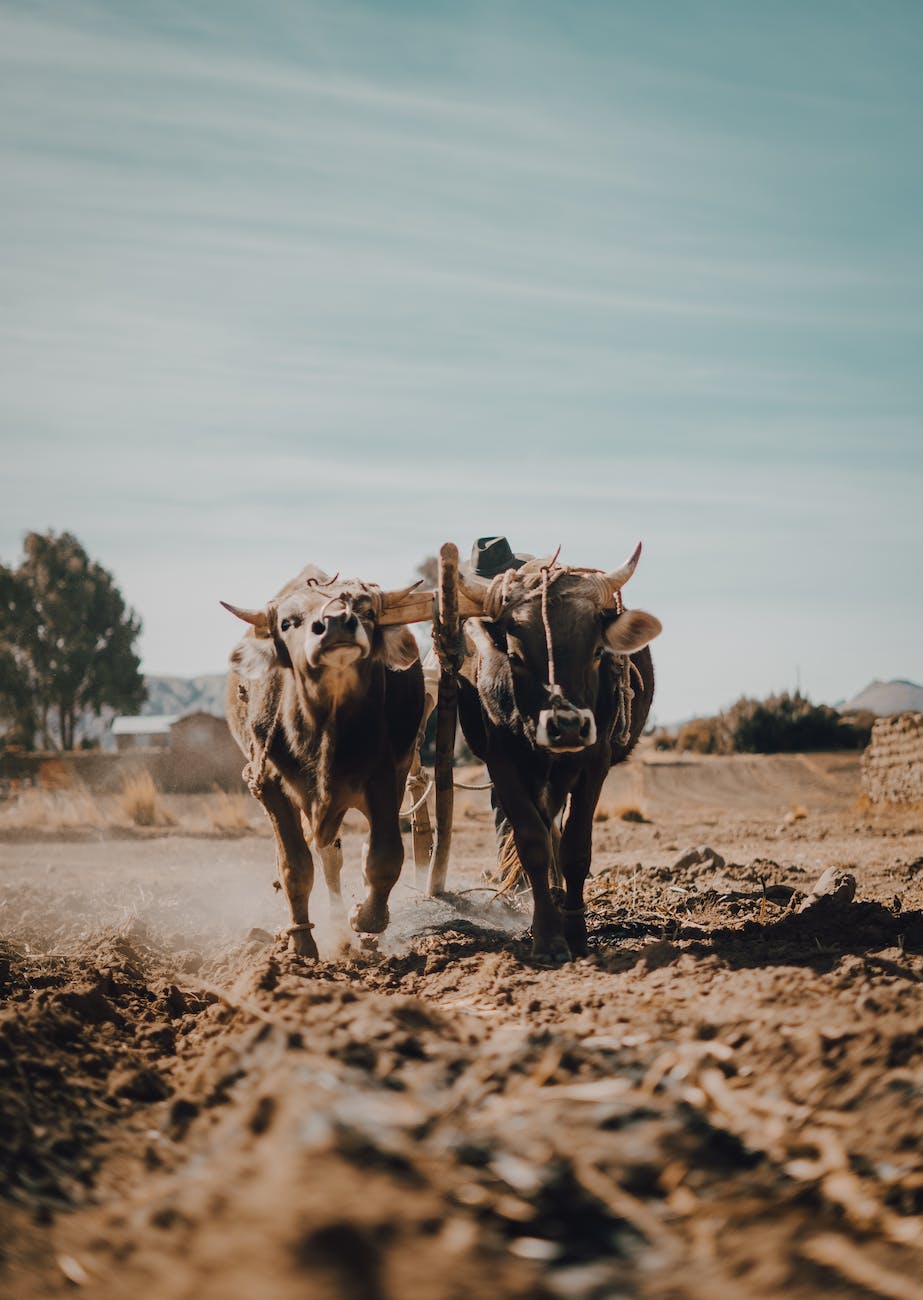

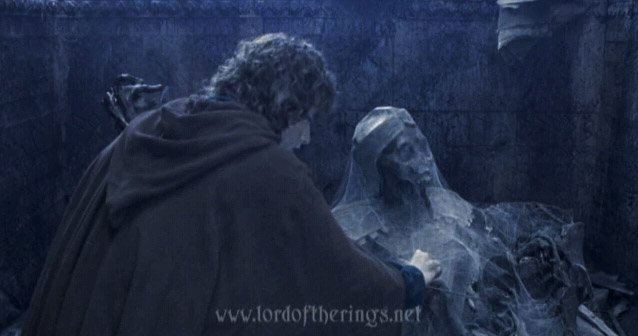
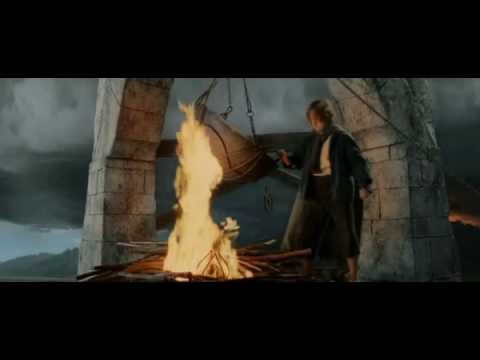



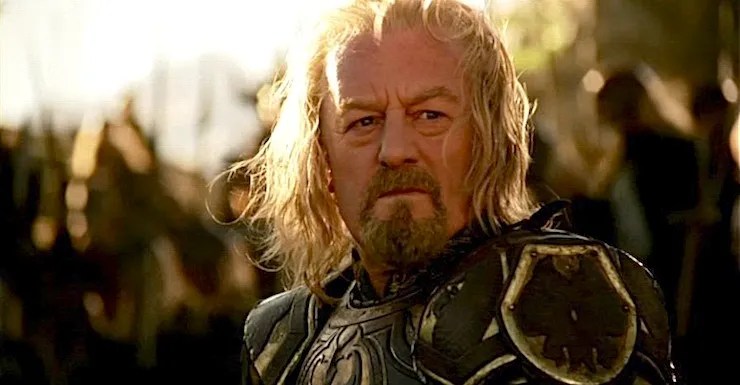

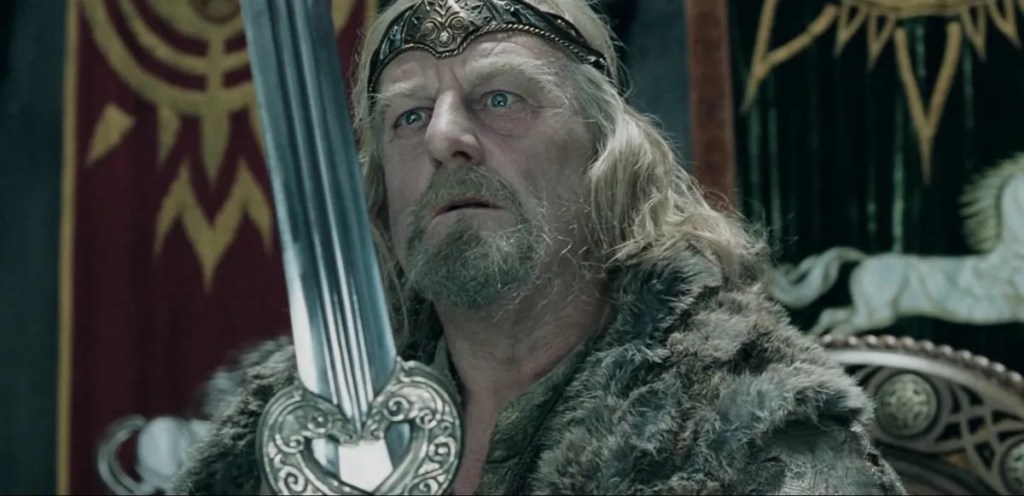


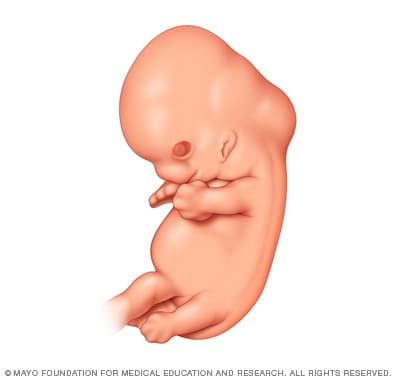


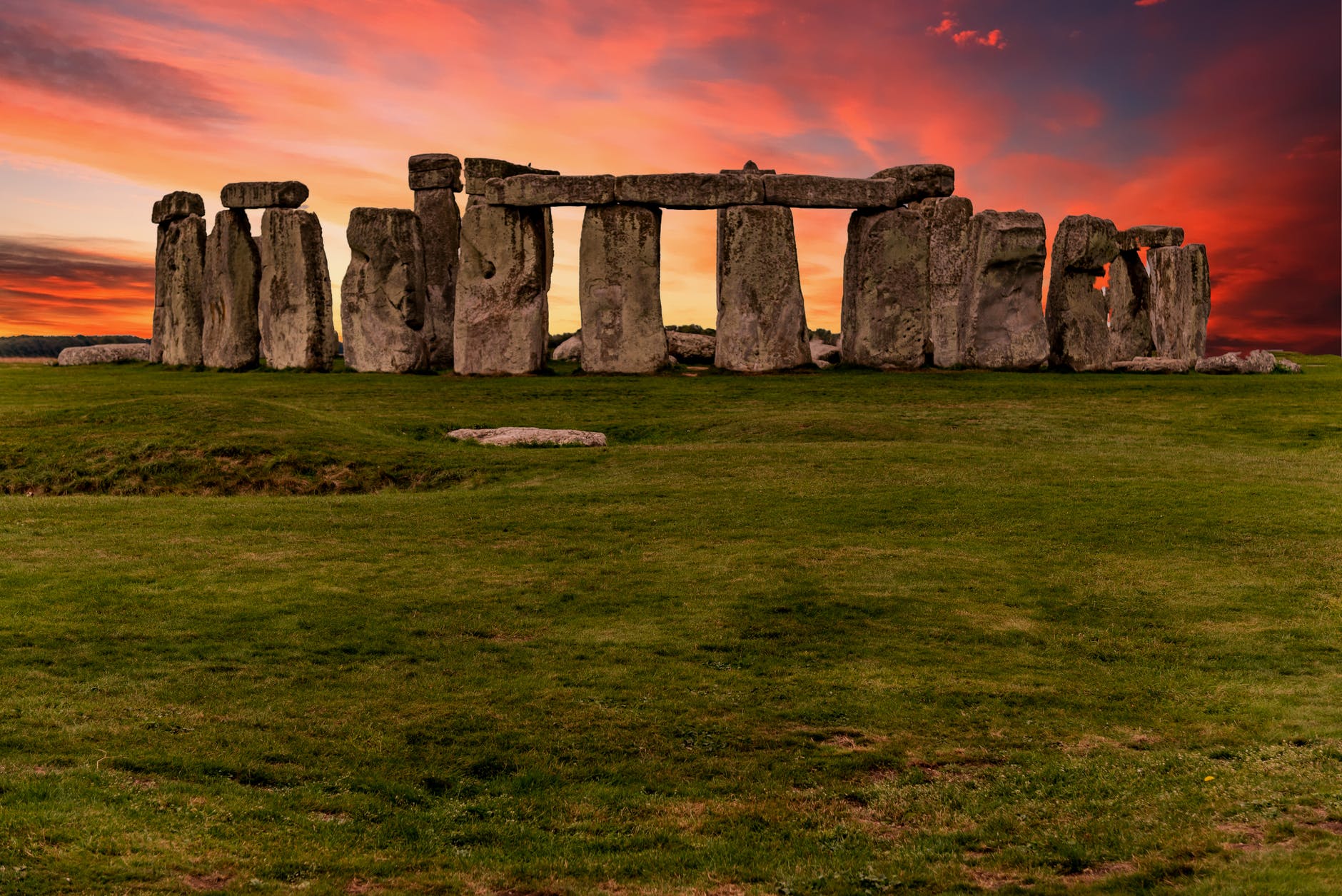















 Selah Vie!