“Here I raise my Ebenezer
Robert Robinson
Here by Thy great help I’ve come
And I hope by Thy good pleasure
Safely to arrive at home”
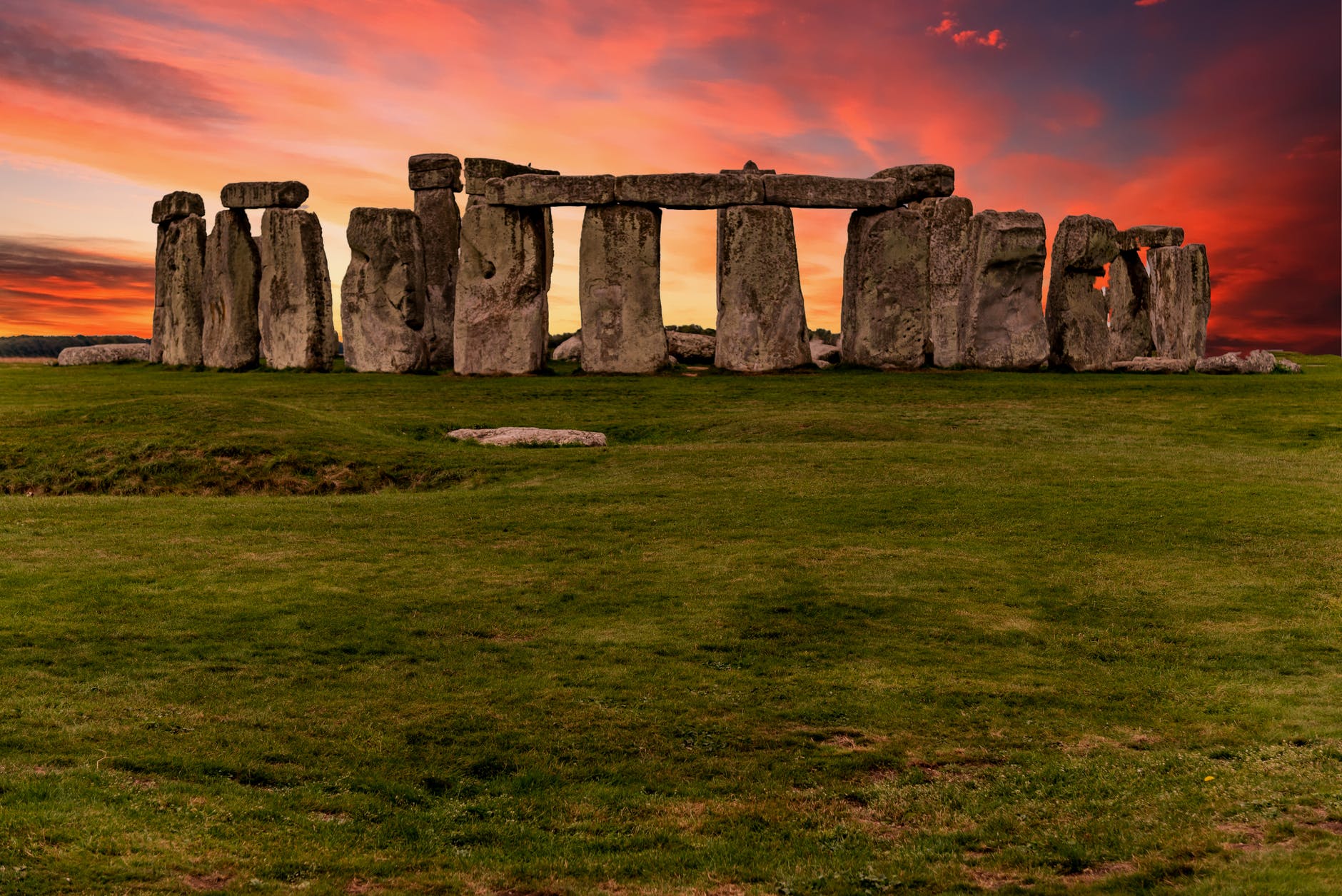
A number of scientists hypothesize that the famous Stonehenge in Wiltshire, England was constructed and used by pagans for ritualistic purposes. The theories behind Stonehenge range from links to early astronomy and Celtic druids to ancient Romans and burial grounds. No one really knows for certain. Archeologists have dated its construction to roughly between 3000 and 2000 B.C. Regardless of why it was built, Stonehenge and other ancient stone monoliths have withstood centuries and remind us of people from eons gone by.
Erecting stone monuments is a practice evidenced in the Bible. The first thing Noah did after disembarking from the ark was build an alter to the Lord. Jacob appeared particularly fond of this practice and set up stones of reminder at least twice. Recorded in Genesis 28:11 and 35:14.
"So Jacob set up a pillar in the place where God had spoken with him--a stone marker--and he poured out a drink offering on it and anointed it with oil." Genesis 35:14
One of the more well-known biblical references is featured in the hymn, “Come Thou Fount of Every Blessing” by Robert Robinson (1758). The second verse highlights a stone of remembrance placed by the prophet, Samuel. He named the stone Ebenezer. It commemorated that fact that the Lord had helped the Israelites repel foreign invaders. In a previous chapter, the Philistines had attacked Israel and absconded with the Ark of the Covenant. The Ark was a physical representation of the Lord’s presence and protection over Israel. It was a symbol central to Israel’s national identity as the chosen people of Jehovah.
"Samuel then took a large stone and placed it between the towns of Mizpah and Jeshanah. He named it Ebenezer (which means “the stone of help”), for he said, “Up to this point the LORD has helped us!” 1 Samuel 7:12 (NLT)

Samuel had precedent for doing this. The act of “raising Ebenezer stones” was completed by Joshua at the Jordan River to mark the Israelites’ entrance into the Promised Land. The Lord had divided the Jordan to allow the people to cross on dry land, led by the priests and Ark of the Covenant.
"Joshua also set up twelve stones in the middle of the Jordan, in the place where the priests who carried the ark of the covenant stood. And the stones are there to this day." Joshua 4:9
And again, Joshua set up a “stone of witness” upon securing a covenant with the people to eschew idols and worship the Lord alone.
14 “Now therefore, fear the Lord, serve Him in sincerity and in truth, and put away the gods which your fathers served on the other side of [d]the River and in Egypt. Serve the Lord! 15 And if it seems evil to you to serve the Lord, choose for yourselves this day whom you will serve, whether the gods which your fathers served that were on the other side of [e]the River, or the gods of the Amorites, in whose land you dwell. But as for me and my house, we will serve the Lord.” Joshua 24:14-15
"Joshua recorded these things in the Book of the Law of God. Then he took a large stone and set it up there under the oak that was near the sanctuary of the LORD.27 And Joshua said to all the people, “Behold, this stone shall be a witness to us, for it has heard all the words of the Lord which He spoke to us. It shall therefore be a witness to you, lest you deny your God.” 28 So Joshua let the people depart, each to his own inheritance." Joshua 24:26-27
Remember that the Israelites had been enslaved in Egypt just 40 years prior to the events of Joshua’s day. They would have known about Egyptian monuments like the pyramids and possibly were even conscripted to build them. They would have known how to erect stones that would last generations.

The Lord likens himself to a Rock many times throughout scripture, and Jesus refers to himself as the “chief cornerstone.” Stone is a firm, powerful image. Who knows? Maybe the ancient peoples who built monuments like Stonehenge borrowed the idea from God’s chosen people. They were most likely contemporaries of one another after all.
At any rate, setting stones of witness and remembrance were solemn acts among the Israelites. They pointed back to something that the Lord had done for the people. Perhaps it is time to “raise an Ebenezer” in your own life. REMEMBER all that the Lord has done for you. His covenant of Salvation with you is indelible and irrevocable and so is His love for you. REMEMBER Him as you trudge through mundane habits. REMEMBER Him when you walk along the beach, go to the grocery store, snuggle up in a living room chair, or brush your teeth in the morning.
Give yourself physical reminders of the Lord’s goodness (a photograph, a Bible verse, or a stone). Acknowledge Him in all your ways and He will make your paths straight. Raise your Ebenezer today, tomorrow, and forever. Amen.
Grace and Peace Friends,
A. A. Wordsmith
 Selah Vie!